- The ARCH's Newsletter
- Posts
- Reflecting on 2025: Building Communities, Navigating Challenges, and Shaping 2026
Reflecting on 2025: Building Communities, Navigating Challenges, and Shaping 2026
As we move through the early weeks of 2026, this newsletter offers a moment to pause, reflect, and look ahead. At The ARCH, our work continues to secure the legacy of heritage crafts within their local cultures while fostering meaningful connections in rural spaces—places where tradition meets the present, where generations share knowledge, and where small actions ripple outward to strengthen community resilience. In 2025 we focused deeply on building communities at Rittergut Schönberg and beyond, creating spaces for dialogue, learning, and shared making. The stories and partnerships that emerged remind us why this matters: in economically challenged rural areas like the Altmark, reviving handcraft not only preserves intangible heritage but also combats isolation, builds belonging, and opens pathways for young and old alike. This edition recaps where we stand on last year's ambitions, celebrates the community spirit that defined 2025, shares our key directions for 2026—including exciting new intergenerational and regional initiatives—and highlights a recent collaborative project that beautifully captures themes of fracture, repair, and renewal. We are grateful for your ongoing interest and involvement. Your support—whether through participation, ideas, or encouragement—helps sustain this vital work.

The ARCH
February 19, 2026


Image credit: Maximilian Gödecke for Zukunftswege Ost
Table of Contents

Image credit: Maximilian Gödecke for Zukunftswege Ost
A Letter from Kerstin Rice, Managing Director
Dear friends, partners, volunteers, and supporters,
I hope this edition finds you well as we settle into February 2026.
It has been a reflective start to the year, giving us time to look back on 2025 and forward with renewed energy. A warm thank you to Franziska, Tim, Chris, and Michael for joining the recent discussion on The ARCH's achievements, challenges, and plans ahead—their perspectives were invaluable. Below you will find a reflection of what we achieved and where we are heading.
I would like to take the opportunity to thank our local volunteers, our supporters, and our funders, such as Gemeinschaftsinitiative Zukunftswege Ost and Lagfa, as well as our partners, trustees, and advisors near and far. Your support meant a lot.
In 2026, we also aim to bring our learning to other areas and collaboratively develop projects with partners worldwide. Feel free to reach out to discuss what impact we can create together. Just email us at [email protected].
With gratitude for your continued support,
Kerstin Rice
Managing Director, The ARCH
Where We Stand on Our 2025 Ambitions
We launched the year with three key focus areas:
Heritage Atlas and Crafts Bank
Progress has been slower than hoped due to funding timelines, but we have exciting momentum. We now hold formal support from UNESCO Germany, Landesheimatbund Sachsen-Anhalt (the regional ICH office), and the Culture Secretary of Saxony-Anhalt to pilot the Heritage Atlas (rebranded for clarity) in a lean, skeleton format right here in our federal state. To deliver reliably within our resources, we've narrowed scope—excluding app and website integration for the time being. The core vision endures: a unified framework co-developed with craftspeople, supported by a data scientist/AI expert to draw insightful conclusions from the data without extra burden on participants, followed by community review. We expect funding decisions by April (timelines have shifted from the usual January). The Crafts Bank remains on hold in the meantime.
A Physical Home for The ARCH
At Rittergut Schönberg, the site has become a thriving community hub and base for the ZukunftsHandwerker programme. Regrettably, the major building works (primarily EU LEADER-funded) were halted due to an issue with the approved project sketch; the additional funds needed to bridge the gap were beyond what we could cover.
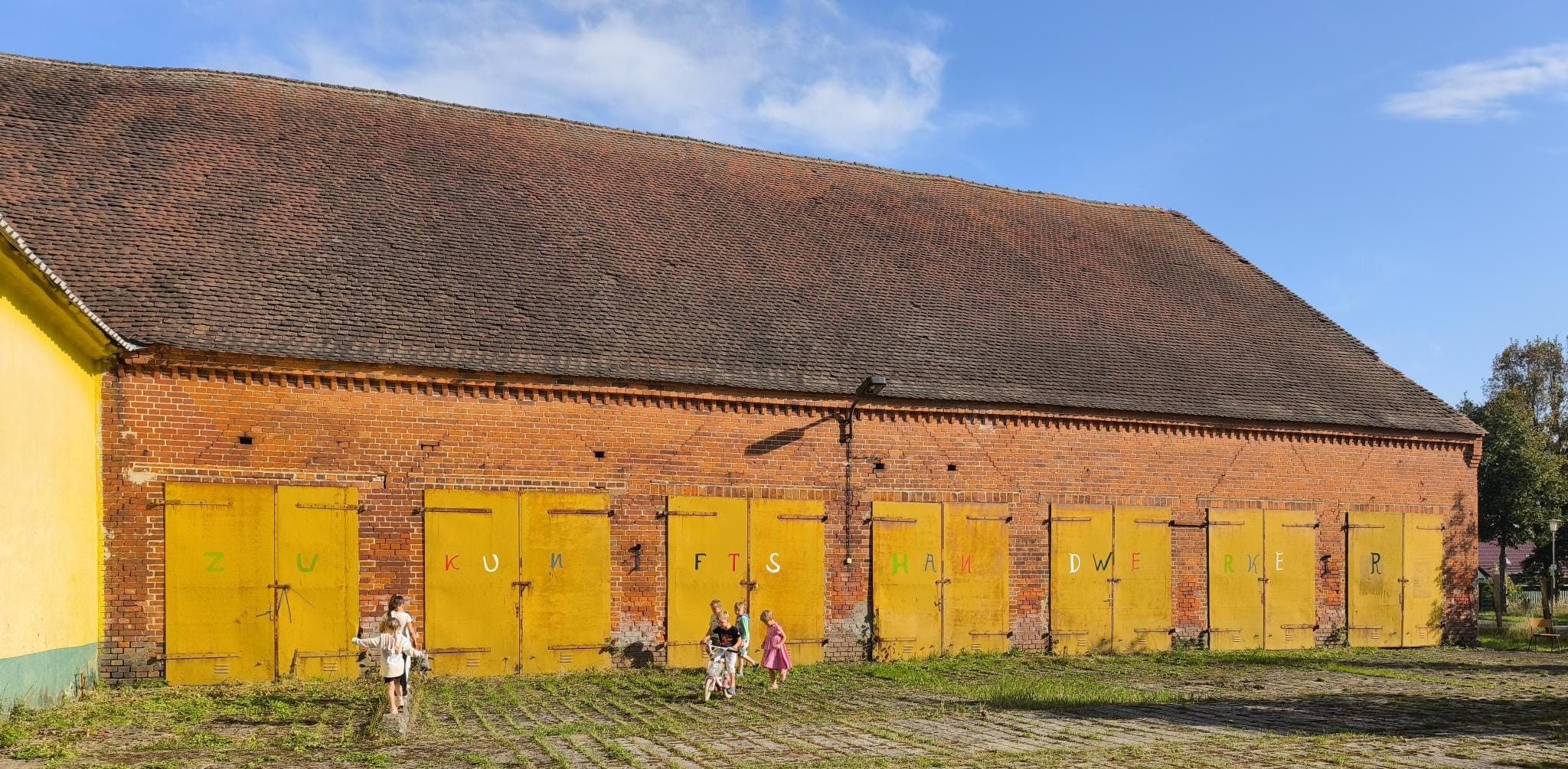
Image credit: The ARCH gUG
Stimulating Demand & Supporting Makers
Drawing from last year's meaningful exchange with Prof. Dr Gerd Gigerenzer, we had planned research to reframe the value of rare crafts and empower artisans globally. Capacity limitations have paused this for now. The companion piece—creating a vibrant community of Craft Connoisseurs—continues to be a priority, and we hope to advance it, potentially with dedicated involvement from one of our Trustees/Advisors and/or partner organisations.
2025 in Essence: Building Communities
If one theme defined the year, it was Building Communities.
At Rittergut Schönberg and nearby we welcomed over 250 participants to local events—spanning ages 3 to 83—and brought on board around 10 volunteers in a village of just 500. The mix of experienced hands and complete newcomers was particularly encouraging: it shows we can create meaningful opportunities for belonging and purpose for those who hadn't yet found their community fit.

Image credit: Maximilian Gödecke for Zukunftswege Ost
Partnerships grew stronger through joint events and are now maturing into trusted, ongoing collaborations with real momentum:
Vitos e.V. — successful participation in Rittergut Schönberg events in April and November 2025; plans underway for joint spring/summer 2026 activities around papermaking and natural-material sculptures along the River Elbe.
Landesheimatbund Sachsen-Anhalt — co-organisers of the October 2025 Workshop of Living Traditions, one of fewer than 10 events worldwide highlighted by UNESCO for the International Day of the Intangible Cultural Heritage. In 2026: participation in the first regional ICH network meeting co-organised by Die Staatskanzlei und der Landesheimatbund and a joint Paraments event on 1 May in Schönberg.
Kreismuseum Osterburg — co-curated traditional and regional embroidery exhibition for the 2025 Workshop of Living Traditions; museum-based crafting events planned for 2026; a co-developed 2027 programme featuring indigo blueprinting exhibition and practical textile-printing workshops for schoolchildren.
Kulturverein Werben — crafting activity at the 2025 Biedermeier Christmarkt; developing a 2026 programme that weaves local storytelling with hands-on crafts.

Image credit: The ARCH gUG
Looking Ahead: 2026 Momentum and Opportunities
We are continuing our community building through heritage, as recently shared in the virtual roundtable meeting on 15 January. In 2026 activities will be co-developed with our local volunteer group, who are already planning a fashion show for this year among other fun activities.
Key projects are:
Generations Hand in Hand: Integrating older adults (60+) who often live alone to combat social isolation in this structurally weak rural area with high poverty rates and limited opportunities for connection. The activities are developed participatively with seniors based on their area of expertise. Through group sessions and buddy pairings the older adults act as mentors to children and young people, connect on a personal level and experience appreciation for their unique talents. We will start next week visiting our local kindergarten to create a community collage depicting our joint home area (Heimat). This initiative transforms the Rittergut Schönberg—once a central workplace, school, and community heart now closed for 25 years—into an age-appropriate neighborhood center that fosters purpose, networking, healthy aging, and social cohesion while addressing barriers like mobility through partnerships. This project is supported by BEQISA through funds provided by the federal state of Saxony-Anhalt.

Image credit: The ARCH gUG
An industrial heritage satellite programme in Tangerhütte, titled Forging the Future: Craft, Community, and Industrial Heritage in Tangerhütte (Zukunft schmieden: Handwerk, Gemeinschaft und industrielles Erbe in Tangerhütte) in partnership with the Förderverein für Industriegeschichte und Gartenkunst „Aus einem Guss“ e.V. and the local youth work of the Einheitsgemeinde Tangerhütte. Focused on the historic Vaethen-Gießereigelände (founded in 1842, featuring iron ore processing, a 12-hectare park by Lenné-Meyer, villas, a mausoleum, and the Paris World Exhibition pavilion from 1889), the project integrates craft education with cultural heritage transmission for over 150 children and youth (ages 8–18, including from disadvantaged families) to address limited educational and cultural participation in the Altmark. This work includes ZukunftsHandwerker satellite workshops in the former model carpentry (apprenticeship workshop) to build STEM skills, creativity, and dialogue-based heritage mediation; a creative placemaking initiative where youth co-design a sculpture route from the carpentry to the New Castle with local artists (participatively deciding design, number, and placement); and community events like a kick-off on 12 April 2026 and closing in April 2027 on Industrial Culture Day, featuring workshops and discussions. The project promotes innovative culture mediation, potential development through MINT, craft, and artistic co-creation, intergenerational dialogue, and global dissemination via The ARCH network as a pilot model for youth-centered, participatory cultural projects.

Image credit: The ARCH gUG
ZukunftsHandwerker on Tour - A two-year programme of mobile craft activities across the Altmark region under the ZukunftsHandwerker initiative, bringing playful craft encounters to children and youth in this vast 4,750 km² (1,840 sq mi) area in northern Saxony-Anhalt to teach creativity, patience, and practical skills as a counterbalance to the digital world, while keeping traditions alive. The sessions are created in tandem by a teacher-craftsperson team to ensure differentiation in skills and also progression to more advanced craft skills. Originating in Schönberg, it expands through pop-up events at selected locations to make real craftsmanship accessible in remote rural communities—awaiting final local LEADER vote confirmation in early March. There is also expressed interest from Saxony-Anhalt's government department for youth work in building a longer-term programme from this pilot.

Image credit: The ARCH gUG
Heritage Atlas funding confirmation awaited (potentially April 2026).
New Resources from The ARCH
We are delighted to share two new resources that capture and extend our recent work in community building and youth engagement through heritage and craft.

Image credit: Booklet design - The ARCH gUG, photo - Maximilian Gödecke for Zukunftswege Ost
Best Practices in Rural Community Building Through Heritage
This post-webinar booklet draws from our Virtual Roundtable on 15 January 2026, featuring insights from speakers including Kerstin Rice (The ARCH), Karl Parnis (Malta Crafts Foundation), Avani Varia (Handspinning Revival, India), Yvonne Conchie (Blanchland Abbey, UK), and Richard Wilding (Middle East Heritage Projects). It explores how intangible cultural heritage can foster resilient rural communities—covering topics such as youth programmes in the Altmark, reviving handspinning in India, preserving pilgrim trails in conflict zones, and grassroots church revitalisation in England. Available in English and German (Hindi version forthcoming), the booklet emphasises inclusive, bottom-up approaches to combat isolation and promote sustainability.
Download here:
The full webinar recording is also available on YouTube.

Image credit: Booklet design by The ARCH gUG
ZukunftsHandwerker Handbook: Crafting the Future with Head, Heart, and Hand
This practical guide is designed for parents, volunteers, and partners interested in the ZukunftsHandwerker project. It explains how playful, hands-on craft encounters for children and youth (ages 3–18) in the rural Altmark build creativity, patience, self-confidence, social skills, and executive functions—while preserving rare traditions like leather embossing, pottery, weaving, and silversmithing techniques. Workshops are co-developed by teachers and craftspeople for differentiated skill levels, with no prior experience or materials required.
Download the German version.
These resources are freely available, and we encourage you to share them widely—whether to inspire similar initiatives, support family involvement, or deepen engagement with heritage-based community work.
Spotlight on the Phönix der Gestaltung Project

Image credit: Isabelle Saliger for Forum Gestaltung
We are thrilled to shine a light on the "Phönix der Gestaltung" project by The ARCH’s Special Advisor Miles Jason Rice. This collaborative initiative was supported by the Kloster Unser Lieben Frauen Foundation and the Kloster Bergesche Foundation. The ARCH supported the project by contributing expertise in intangible cultural heritage, conducting research in the Forum Gestaltung archive (which holds around 4,000 student and teacher works from the late 19th century to 1963 documenting the history of the Kunstgewerbe- und Handwerkerschule Magdeburg), and co-presenting the work in December 2025 alongside Forum Gestaltung to bridge craft traditions and cultural history with contemporary artistic expression. This endeavour aimed to create an artwork that interprets Magdeburg's rich art and craft history, particularly that of the former School of Applied Arts and Crafts (1793–1963). The result is the captivating contemporary sculpture, which celebrates the renaissance of art and craft at the Forum Gestaltung Magdeburg.

Image credit: Forum Gestaltung (all rights reserved)
Inspired by the 1947 exhibition "Magdeburg lebt" and Wilhelm Deffke's iconic Phoenix symbol, Miles Rice’s work embodies resilience and cultural renewal. Crafted from an old oak timber beam sourced from Rittergut Schönberg in the Altmark—using traditional woodworking techniques and golden Kintsugi veins—the sculpture transforms breaks and fractures into sources of strength and beauty. It honours Magdeburg's avant-garde spirit and the unbreakable bond between craft and art, symbolising the site's transformation into a vibrant cultural centre since 2004.
Presented by Forum Gestaltung and The ARCH, the project not only honours our shared cultural heritage but also illuminates the interdisciplinary fusion of craftsmanship and artistry. The piece has been gifted to the Forum Gestaltung and is shown in their permanent exhibition *ganz modern and will be shown at other locations, such as Kunsthof Dahrenstedt, Katharinenkirche Stendal and Salzkirche Werben to strengthen Saxony-Anhalt's cultural identity further. We invite you to explore this symbol of renewal and consider how it inspires your own connections to heritage.
The ARCH gUG supported by

Follow us on Instagram:
Follow us on LinkedIn: